Best Vietnamese Dishes Every First-Time Visitor Should Try
Vietnam is one of those countries where food is not just part of the trip. For many travelers, it becomes the trip. The country’s cuisine changes from north to south, with northern food generally known for cleaner, simpler flavors, central food for more spice and intensity, and southern food for sweeter, more open-ended flavors. Rice also sits at the heart of Vietnamese food culture, which helps explain why so many iconic dishes revolve around rice noodles, rice paper, broken rice, or rice flour.
What makes Vietnamese food so memorable is balance. A single bite can be fresh, salty, sour, savory, herbal, and smoky at the same time. Herbs are not just garnish, dipping sauces are not an afterthought, and texture matters as much as flavor. That is why a first-time visitor should not stop at phở and bánh mì, even though both are classics. The real joy is tasting how each region expresses its own history, landscape, and daily life through food. Vietnam Tourism
This article may contain affiliate links. If you book through these links, I may earn a small commission at no extra cost to you. I only recommend travel resources that can genuinely help you plan your Vietnam trip more easily. Thank for your support!
Plan Your Vietnam Food Trip
To make planning easier, here are some helpful resources:
🎟️ Book food tours and activities in HCMC Vietnam
🛡️ Get travel insurance for Vietnam
Why Vietnamese food feels so special
Vietnamese food is deeply connected to time and place. Some dishes are breakfast foods, some are lunch specialties, and some belong so strongly to one city that eating them there feels completely different from eating them elsewhere. Official tourism guidance highlights that bún chả is tied closely to Hanoi, bún bò Huế to Huế, cao lầu to Hoi An, and cơm tấm to Ho Chi Minh City. That regional identity is a big part of what makes eating across Vietnam feel like cultural travel, not just dining.
Another reason Vietnamese food stands out is the role of texture. Vietnamese dishes are rarely just about flavor. They are also about crunch, softness, chew, warmth, freshness, and contrast. You see that in dishes like bánh xèo, where the crisp pancake meets lettuce and herbs, or in gỏi cuốn, where the soft rice paper wrap depends on a bold dipping sauce for balance.. Vietnam Tourism
1. Phở
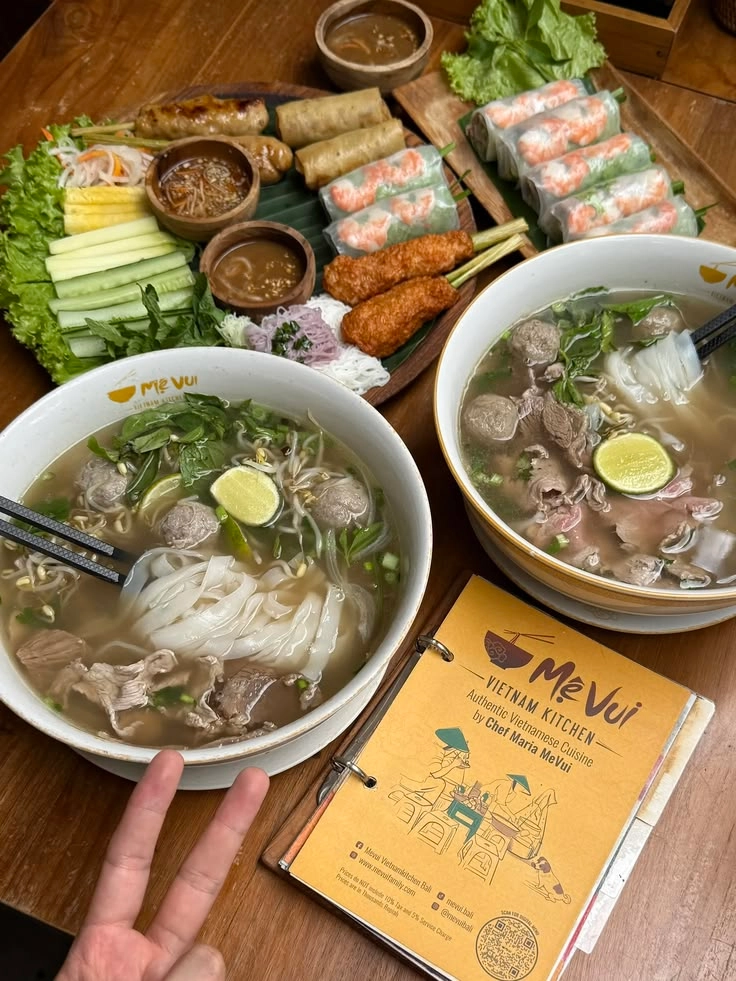
Phở is the first Vietnamese dish most travelers recognize, but in Vietnam it feels much more personal and everyday than its global reputation suggests. Britannica notes that phở likely developed in northern Vietnam near Hanoi, and Vietnam’s tourism site adds that its history begins in the late 19th century, when French demand increased the availability of beef and helped shape the broth-based style we know today.
A good bowl of phở tastes deep but clean. The broth should be aromatic rather than heavy, the rice noodles soft and silky, and the overall flavor balanced by herbs, lime, and condiments. Northern-style phở is usually more restrained and broth-focused, which is why many travelers say Hanoi is the best place to understand it properly. Phở matters culturally because it shows how Vietnamese food can be simple on the surface while still carrying history, technique, and regional identity. Britannica
2. Bún chả
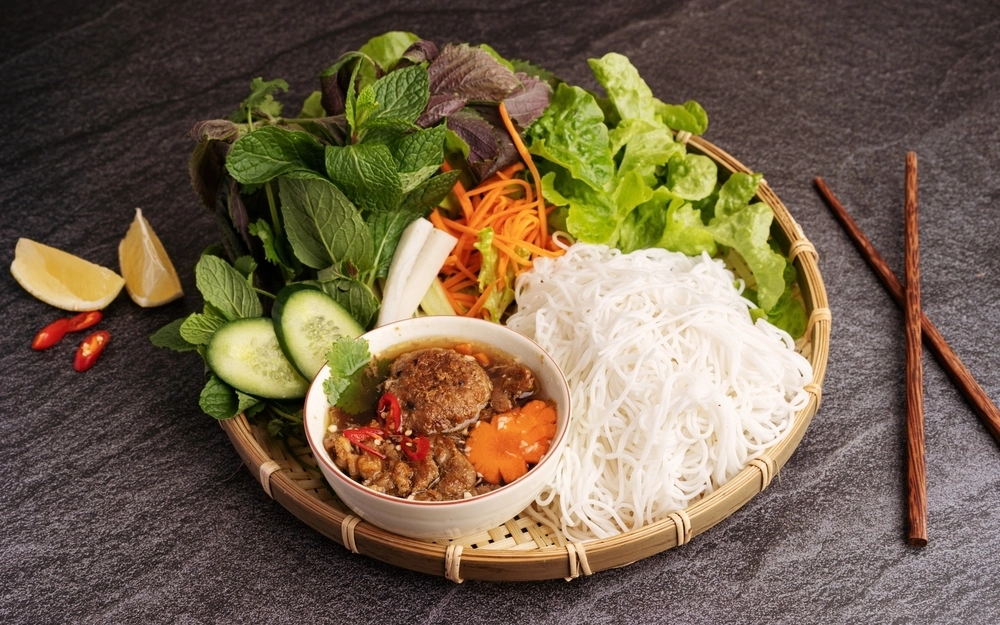
If phở is the breakfast icon, bún chả is one of Hanoi’s most classic lunch dishes. Vietnam’s official tourism site describes it as almost exclusively a lunch meal and explains that it combines chargrilled pork belly and patties with diluted vinegar fish sauce, rice noodles, herbs, and vegetables.
The taste is smoky, sweet, savory, and bright. The grilled pork gives the dish its soul, while the dipping sauce keeps it lively and light rather than heavy. You should try bún chả because it captures the rhythm of Hanoi street eating so well: fast, flavorful, casual, and local. It is also a great example of Vietnamese balance, since every bite depends on combining noodles, herbs, meat, and sauce together.Vietnam tourism
Planning Hanoi?
👉 Check the best hotels in Ha Noi capital
3. Bánh mì
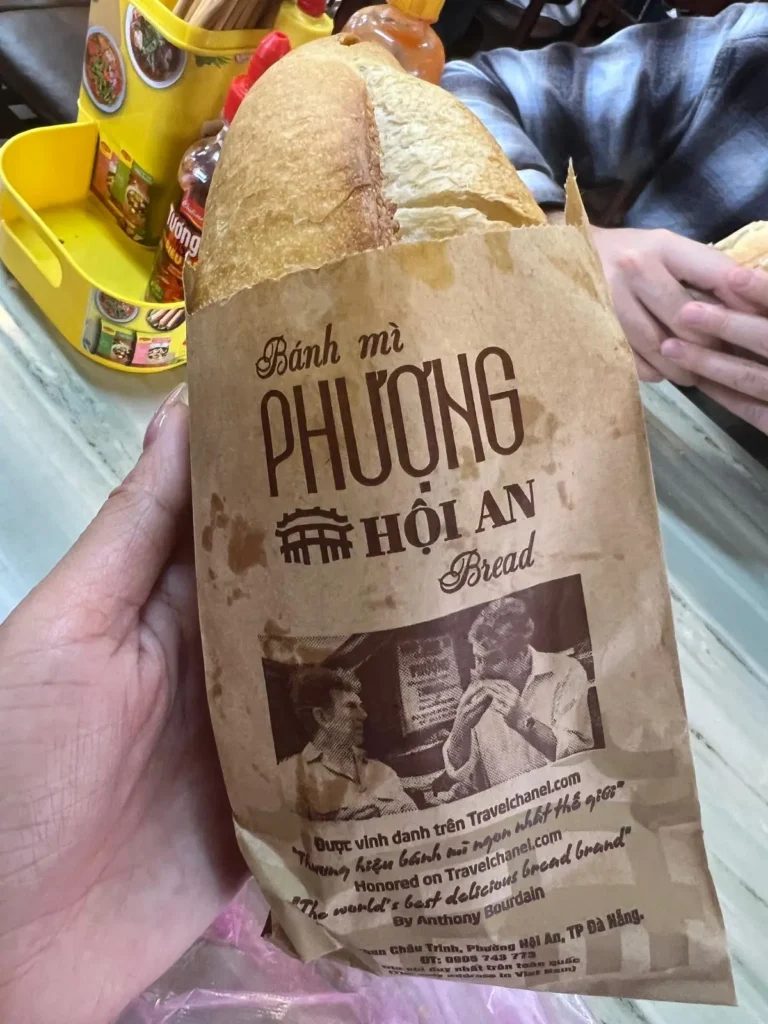
Bánh mì is one of Vietnam’s most famous street foods, but it is much more than “a Vietnamese sandwich.” Vietnam’s tourism site explains that when the French baguette arrived in Vietnam more than a century ago, locals continuously reinvented it, and today each region has its own take.
The flavor of bánh mì is all about contrast. A good one should have a light crisp crust, a soft center, savory fillings, fresh herbs, crunchy pickles, and a little heat if you want it. It is worth trying because it represents adaptation in Vietnamese food culture: a borrowed form made fully local through ingredients, taste, and everyday street-life habits. For first-time visitors, it is also one of the easiest dishes to grab on the go.
4. Bún bò Huế
Bún bò Huế is one of the best dishes to order when you want to taste central Vietnam’s stronger side. Vietnam’s official tourism site describes Huế as a place known for imperial heritage and spicy food, and calls bún bò Huế a rich, red, spicy broth tied closely to the city’s identity.
Compared with phở, this soup is bolder, more intense, and more layered with lemongrass and chili. It tastes savory, citrusy, spicy, and deeply aromatic. It matters culturally because Huế cuisine carries both royal legacy and strong regional personality. If you want proof that Vietnamese food is not always delicate and mild, this is the bowl to order.
5. Cao lầu
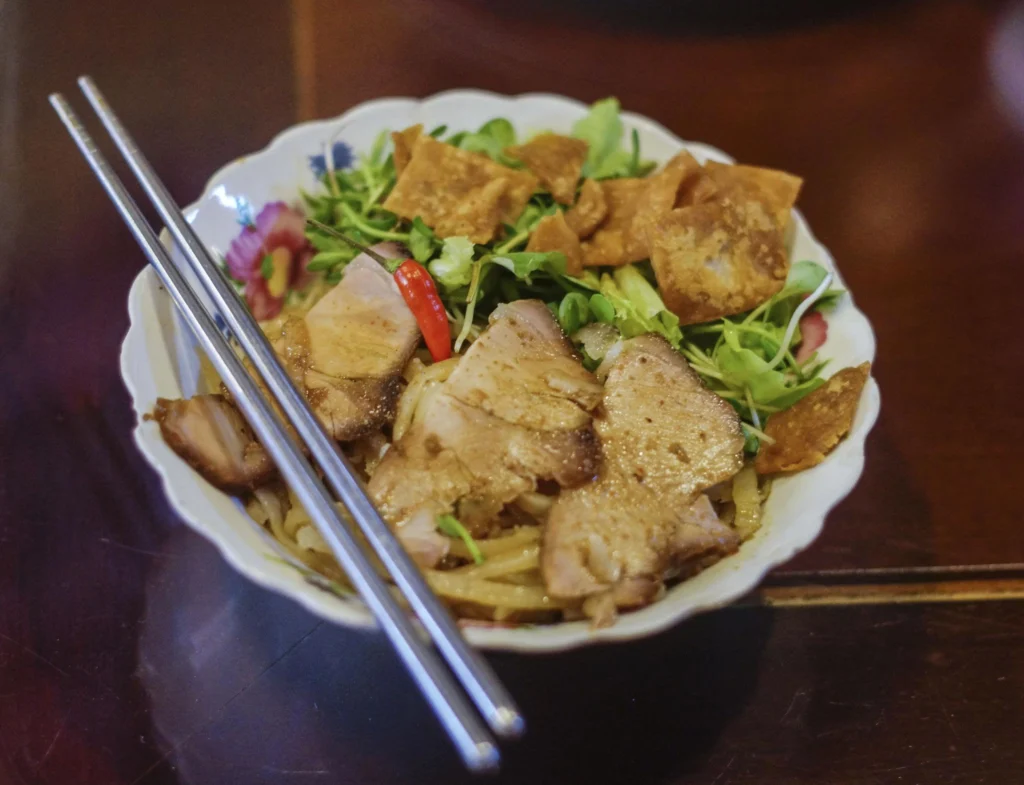
Cao lầu is one of Vietnam’s most location-specific dishes and one of the clearest reasons to eat regionally. Vietnam’s tourism site describes it as “Hoi An in a bowl,” unique to the town and traditionally made with local ingredients, including water associated with the historic Ba Le Well. UNESCO also describes Hoi An as an exceptionally well-preserved Southeast Asian trading port shaped by both local and foreign influences, which helps explain why cao lầu is often discussed as a dish of cultural fusion. Vietnam Tourism
The dish is not brothy like phở. Instead, it has chewy, springy noodles, slices of pork, herbs, greens, crispy toppings, and just enough liquid to tie everything together. The flavor is savory and concentrated, with a texture that makes it instantly memorable. If you are going to Hoi An, this is one of the most important local dishes to try because it feels inseparable from the town’s history and identity.
Looking for a food experience in Hoi An?
👉 Browse your food tour inHoi An here
6. Bánh xèo
Bánh xèo is one of the most interactive and satisfying dishes in Vietnamese cuisine. Vietnam’s tourism site describes it as a turmeric-spiced pancake filled with bean sprouts, pork, shrimp, and sometimes mushrooms, then wrapped in lettuce and herbs before dipping.
The taste is crispy, fresh, savory, and slightly rich, but the herbs and dipping sauce stop it from ever feeling too heavy. You should try bánh xèo because it teaches you something important about Vietnamese food: a dish is often finished at the table by the person eating it. Wrapping, dipping, and adjusting each bite is part of the culture, not just a side detail.
7. Gỏi cuốn
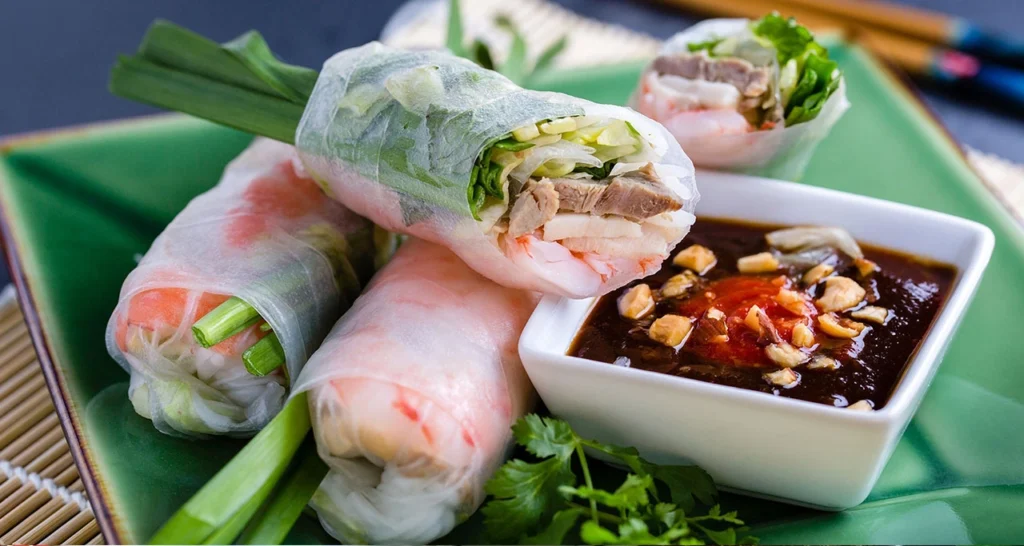
Gỏi cuốn, or fresh spring rolls, reveal the lighter, cooler side of Vietnamese food. Vietnam’s tourism site says freshness is at the heart of gỏi cuốn, with lettuce, herbs, rice noodles, pork, and prawn wrapped in softened rice paper, while the dipping sauce gives the dish much of its boldness.
The flavor is clean, herb-forward, and refreshing. The roll itself is gentle, but the sauce adds the depth. This is a dish worth trying because it shows how Vietnamese food can be vibrant without being heavy, and how freshness is treated as a serious flavor element in its own right.
8. Cơm tấm
Cơm tấm is one of the dishes that best represents southern Vietnam. Vietnam’s official tourism site says it originated in Ho Chi Minh City and began as a practical dish made from broken rice grains that were not suitable for sale. It also describes it as one of the city’s essential local foods.
The taste is comforting and direct: smoky grilled pork, soft rice, sharp pickles, and fish sauce with a slight sweetness that reflects the southern flavor profile. This dish matters because it tells a humble local story. What began as a practical meal became one of the most recognizable foods in Saigon, which is exactly the kind of everyday history that makes Vietnamese cuisine so interesting
Staying in Ho Chi Minh City?
👉 Browse your best hotels in Ho Chi Minh City
9. Chả cá
Chả cá is one of Hanoi’s most distinctive specialties. Vietnam’s tourism site describes it as fish marinated with turmeric and grilled, then cooked with lots of spring onion and dill right at the table. It also notes that family-run restaurants have protected their marinades for generations, and that chả cá has become a symbol of Hanoi itself.
The flavor is savory, aromatic, herbal, and slightly smoky. The turmeric gives warmth, the dill makes it unmistakable, and the noodles, peanuts, and sauces turn it into a full experience rather than just a fish dish. You should try it because it captures the ritual side of eating in Vietnam: sizzling, assembling, sharing, and eating communally.
10. Bánh cuốn
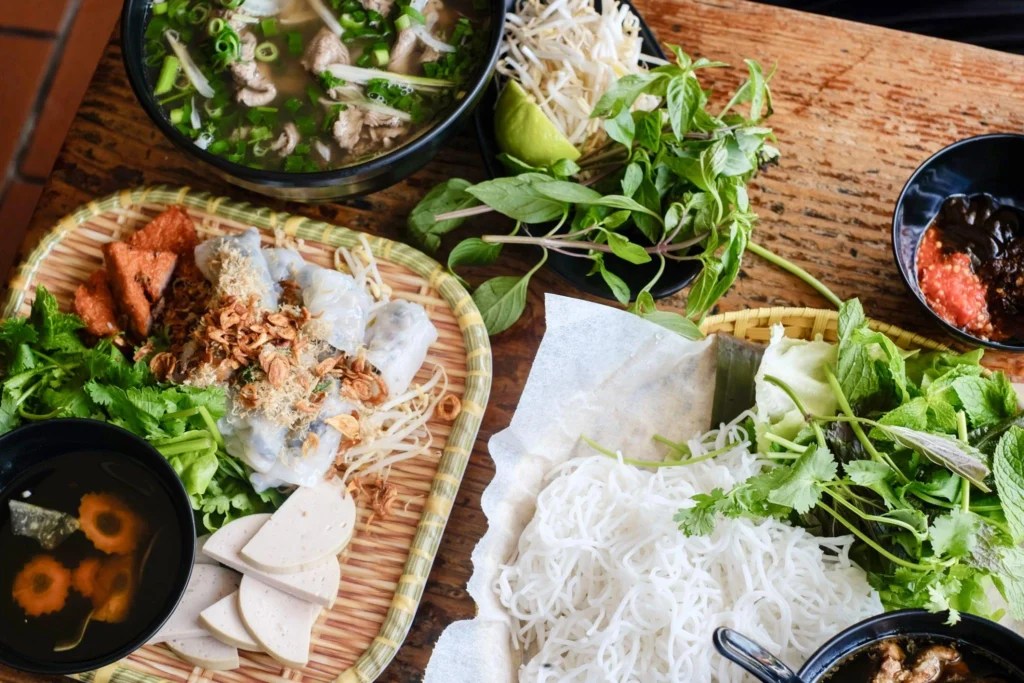
Bánh cuốn is a brilliant dish for understanding the quieter elegance of Vietnamese cooking. Vietnam’s tourism site describes it as a traditional Hanoi breakfast made from steamed rice sheets wrapped around minced pork and wood-ear mushroom, then topped with shallots and served with fish sauce and herbs.
The flavor is subtle, silky, savory, and balanced rather than loud. It is worth trying because it teaches first-time visitors to notice texture and delicacy, not just intensity. Some of the best Vietnamese dishes are memorable not because they are dramatic, but because they are so carefully balanced.
How to eat Vietnamese food like a local
The best local advice is simple: eat dishes at the time of day locals eat them. Phở and bánh cuốn make sense in the morning. Bún chả is strongly associated with lunch in Hanoi. Cơm tấm is also often eaten early in the day in Ho Chi Minh City. Going when locals go usually gives you fresher food and a more authentic atmosphere. Vietnam’s official street-food guidance explicitly recommends eating when the locals do.
It also helps to trust the full setup on the table. Herbs, lime, chili, greens, dipping sauce, and pickles are not decoration. They are part of the dish. Vietnamese food often depends on final customization at the table, so do not be afraid to build the bite the way locals do.
Practical tips for planning a food trip in Vietnam
A food trip to Vietnam is much easier when you stay connected and keep logistics simple. For big-city food hunting, mobile data matters because it helps with maps, translations, menus, and ride-hailing. Official tourism guidance for Ho Chi Minh City notes that travelers with a Vietnamese SIM can use ride-hailing apps like Grab, which is one more reason an eSIM or local SIM is useful on arrival.
For first-time visitors, booking a central hotel and one guided food experience can also make the trip smoother, especially in Hanoi, Hoi An, or Ho Chi Minh City. A good food tour gives you cultural context, not just extra tastings, and travel insurance is worth considering for a multi-stop trip where flights, weather, or illness can affect plans.
📱 Get a Vietnam eSIM before your trip
🛡️ Buy travel insurance for Vietnam
Plan Your Trip (Quick Links)
👉 ✈️ Flights → Compare prices and find the best deals
🏨 Hotels → Browse top-rated stays
🎟️ Activities → Book tours and explore the best food tours
📱 eSIM → Stay connected instantly without roaming fees
🛡️ Travel Insurance → Travel with peace of mind
Fina thoughts
The best Vietnamese dishes every first-time visitor should try are not just famous because they taste good. They matter because each one tells you something about place, history, and daily life. Phở speaks to northern roots and a layered story of adaptation. Bún chả captures lunchtime in Hanoi. Bún bò Huế shows the boldness of central Vietnam. Cao lầu reflects Hoi An’s trading-port identity. Cơm tấm carries the practical, local spirit of Saigon.
The best way to experience Vietnamese food is to stay curious and eat regionally. Try the dish where it belongs, at the time locals eat it, and with the herbs and sauces that complete it. That is when Vietnamese cuisine really starts to make sense.
Related Articles
If you are planning more of Vietnam, read these next:
No responses yet