How to Plan Your First International Trip: Complete Beginner Guide
Planning your first international trip can feel exciting and stressful at the same time. You may be dreaming about new food, beautiful streets, beaches, cities, and experiences — but then the practical questions start: Do I need a visa? Is my passport valid? How much money should I bring? What if I get lost? What should I pack? How do I stay safe?
The good news is that your first trip abroad does not have to be complicated.
A successful first international trip is not about planning every minute. It is about preparing the important things before you go, leaving enough flexibility, and knowing what to do when something changes.
This guide will walk you through the full process step by step, from choosing your destination to booking flights, checking documents, planning your budget, packing smart, staying safe, and enjoying your first days abroad with more confidence.
” This article may contain affiliate links. This means I may earn a small commission if you book hotels, flights, or activities through these links, at no extra cost to you.
I only recommend services and platforms that I personally use or would genuinely suggest to travelers. These small commissions help me keep this blog running and continue creating free travel guides, tips, and experiences to help you plan your trip.
Thank you for your support💙💙.
Why Your First International Trip Feels Overwhelming
Your first international trip feels different from a local trip because there are more things to think about. You are crossing borders, using a different currency, maybe speaking another language, and learning new rules.
You may need to think about:
- Passport validity
- Visa or entry requirements
- Travel insurance
- Flight connections
- Airport transfers
- Local transport
- Currency exchange
- Phone data or eSIM
- Health advice
- Local laws and customs
- Safety in a new place
This sounds like a lot, but you do not need to solve everything at once. The easiest way to plan your first international trip is to follow a clear order: choose the destination, check documents, book the main travel pieces, prepare for safety and health, then plan the details.
Official travel resources also recommend checking destination-specific information before going abroad, including travel advisories, local laws, safety conditions, entry rules, and health guidance.
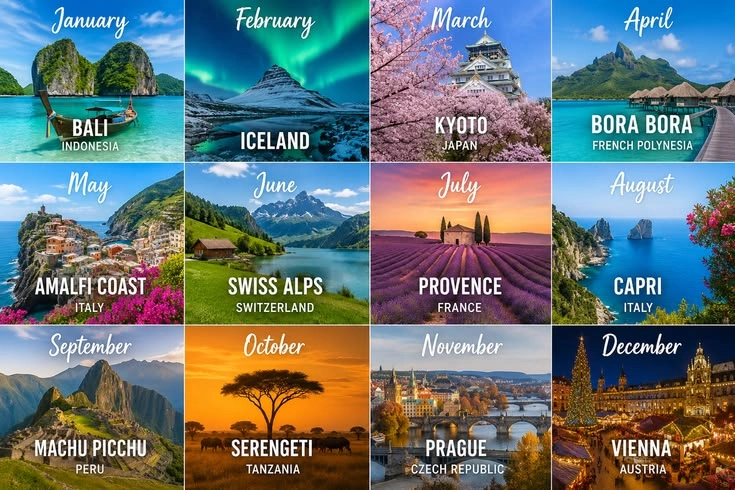
Step 1: Choose the Right Destination for Your First International Trip
Choosing the right destination can make your first international trip much easier. Some places are more beginner-friendly because they have good public transport, clear tourist infrastructure, safe neighborhoods, many accommodation options, and simple entry rules.
What Makes a Destination Beginner-Friendly?
For your first trip abroad, look for a destination that feels manageable.
A good first international destination usually has:
- Easy airport connections
- Safe and central accommodation areas
- Reliable public transport
- Clear visa rules
- Good phone/internet access
- Many restaurants and shops near tourist areas
- Enough English support if you are nervous about language
- A mix of free and paid activities
- Good reviews from other first-time travelers
You do not need to choose the most popular destination, but you should choose somewhere that matches your comfort level.
For example, if you are nervous about transport, choose a city with metro, tram, or walkable neighborhoods. If you are worried about language, choose a destination where English is commonly used in tourist areas. If you are traveling alone as a woman, look for recent safety reviews from other women travelers.
Start With One Country or One Region
For your first international trip, avoid planning too many countries in one itinerary. It can be tempting to visit five cities in ten days, but constant movement can become expensive and tiring.
A slower itinerary is usually better for beginners.
Instead of trying to visit many places, choose:
- One city for a short trip
- One country for one or two weeks
- One region with easy train or bus connections
- One base with day trips
This gives you time to understand the destination, learn how transport works, find local food spots, and enjoy the experience without rushing.
Consider Your Travel Style
Before booking, ask yourself what kind of trip you want.
Do you want:
- A relaxing beach trip?
- A cultural city break?
- A food-focused trip?
- A nature adventure?
- A budget backpacking trip?
- A comfortable hotel-based holiday?
- A solo self-discovery trip?
Your travel style affects where you should go, how much you need to budget, and how much planning is required.
A first international trip should feel exciting, but not impossible.
Step 2: Check Passport, Visa, and Entry Requirements
Before you book flights, check your passport, visa rules, and entry requirements. This is one of the most important steps when planning your first international trip.
Check Your Passport Early
Your passport must be valid for international travel, but many destinations also require it to be valid for a certain period beyond your arrival or departure date. Some countries require blank passport pages for entry stamps.
Because rules vary by destination, always check official country-specific requirements before booking. The U.S. Department of State’s international travel checklist recommends checking entry and exit requirements, visas, passport validity, and local rules before traveling abroad.
Do not leave this until the last minute. Passport processing or renewal can take time, especially during busy travel seasons.
Check If You Need a Visa
A visa is official permission to enter a country. Some destinations allow visa-free travel for certain passport holders, while others require an eVisa, visa on arrival, transit visa, or embassy visa.
Check:
- Do you need a tourist visa?
- Do you need a transit visa for a layover?
- How long can you stay?
- Do you need proof of onward travel?
- Do you need proof of accommodation?
- Do you need a return ticket?
- Do you need travel insurance for entry?
Never rely only on social media comments or old blog posts for visa rules. Visa requirements can change. Use official government or embassy sources before paying for flights.
Save Digital and Paper Copies
For your first international trip, keep copies of important documents in more than one place.
Make copies of:
- Passport
- Visa or eVisa
- Travel insurance
- Flight booking
- Hotel booking
- Emergency contacts
- Driver’s license, if needed
- Vaccination or health documents, if required
Save digital copies in secure cloud storage or email. Keep one paper copy separate from your passport.
If your phone dies, your bag is lost, or you need help at an airport, copies can make the situation much easier.
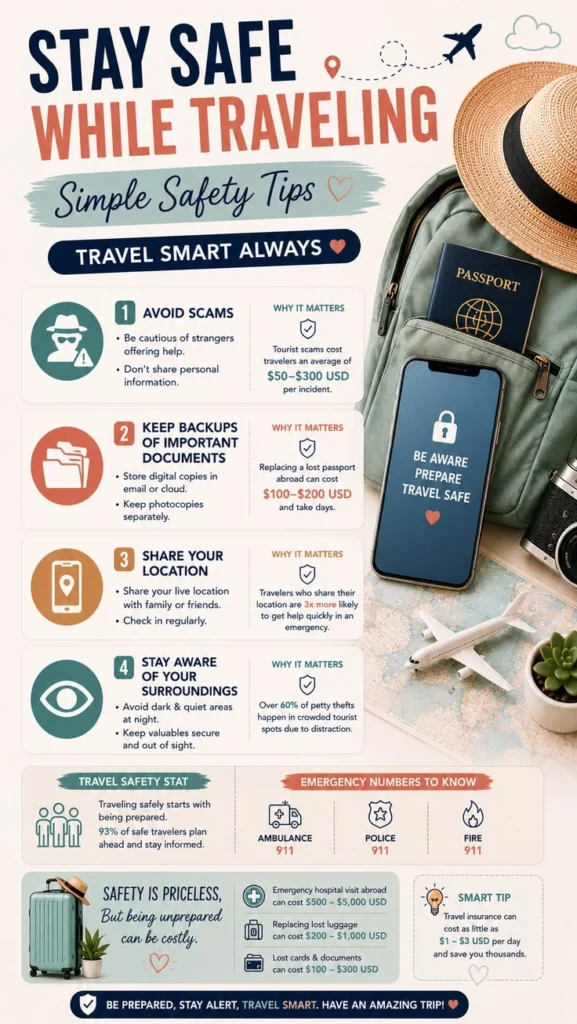
Read next: Travel Safety Tips for First-Time Travelers
Step 3: Plan Your Budget, Flights, and Accommodation
After checking documents, start planning your trip budget and booking the main pieces: flights and accommodation.
Create a Realistic Travel Budget
A realistic budget helps you enjoy the trip without worrying every day.
Include:
- Flights
- Accommodation
- Airport transfers
- Local transport
- Food and drinks
- Activities and entrance fees
- Travel insurance
- SIM card or eSIM
- Shopping and souvenirs
- Emergency money
Many first-time travelers only budget for flights and hotels, then feel surprised by daily costs. Food, transport, luggage storage, tips, city taxes, and small fees can add up quickly.
A good rule is to create three budget levels:
- Essential budget: what you must spend
- Comfort budget: what makes the trip easier
- Experience budget: what you want to spend on special memories
This helps you decide where to save and where to spend.
Book Flights With Enough Connection Time
When booking your first international flight, do not choose the shortest connection unless you are experienced with airports.
International travel can involve:
- Passport control
- Security checks
- Terminal changes
- Baggage recheck
- Delays
- Long walking distances
- Different airline rules
A cheaper flight with a very tight layover may cause more stress than it is worth.
For your first international trip, choose flights with comfortable connection time, clear baggage rules, and arrival times that make sense. Arriving in a new country during daylight is often easier, especially if you are traveling alone.
Choose Accommodation in a Practical Area
Your accommodation location affects your safety, budget, and daily comfort.
For your first trip abroad, choose accommodation that is:
- Near public transport
- In a safe area
- Close to restaurants or shops
- Well-reviewed by recent guests
- Easy to reach from the airport or station
- Not too far from your main activities
- Suitable for your travel style
The cheapest accommodation is not always the best value. If it is far from the center, you may spend more money and time on transport.
For women and solo travelers, read reviews carefully. Look for comments about location, lighting, reception, locks, and how safe the area feels at night.
Plan Your Trip
To make planning easier, add your affiliate links here:
✈️ Compare flights for your dates
🏨 Compare hotels in safe, central areas
🎟️ Browse tours, tickets, and experiences
Read next: Budget Travel Guide: How to Plan Affordable Trips Without Missing Out
Step 4: Prepare for Safety, Health, Money, and Travel Insurance
This step is where your first international trip becomes more secure. You do not need to feel scared, but you should be prepared.
Check Official Travel Advisories
Before traveling, check official travel advisories for your destination. Travel advisories can explain safety risks, entry conditions, local laws, health information, and country-specific concerns. The U.S. Department of State provides country information and travel advisory levels, while the CDC also notes that travelers can use travel advisories and destination pages to understand risks and conditions.
This is especially important if you are traveling during political events, extreme weather seasons, health outbreaks, or to a destination you do not know well.
Check Travel Health Advice
Health preparation is part of smart travel planning. Before your first international trip, check whether your destination has vaccine recommendations, health notices, food and water precautions, mosquito risks, or medication guidance.
CDC Travelers’ Health provides official U.S. government health recommendations for travelers and destination-specific travel health information. CDC traveller’s health
You may need to prepare:
- Routine vaccines
- Destination-specific vaccines
- Prescription medication
- Mosquito repellent
- Sunscreen
- Hand sanitizer
- Basic first aid
- Food and water safety habits
- Travel insurance with medical coverage
The World Health Organization also advises travelers to seek information on potential health risks before travel so they can stay safe and healthy while away.
For Swedes and European citizenship
For seamless medical coverage across the EU, ensure everyone in your party carries a free European Health Insurance Card. Swedish residents can order theirs directly through Försäkringskassan. For safety, always supplement the card with private travel insurance, as the EHIC does not cover private healthcare or medical repatriation
or travel outside the EU, comprehensive private travel insurance is vital. Before leaving Sweden, always check the Ministry for Foreign Affairs (UD) Travel Advice for your destination
- Private Insurance: Standard Swedish home insurance (hemförsäkring) usually covers the first 45 days, but you must supplement it with comprehensive travel insurance for longer trips to cover emergency evacuations, extensive hospital stays, and transport home.
- Vaccines & Medications: Check local requirements at least 6 weeks before departure and ensure an adequate supply of your prescription medications.
General Safety & Emergencies:
- UD Resklar: Download the Swedish UD’s app for updated security alerts and local embassy contacts.
- Svensklistan: Register your contact details on Svensklistan (The Swedish List) so the Ministry can contact you in the event of a major crisis or natural disaster.
- Travel Advisories: The Swedish UD issues warnings against travel to regions with high danger or unpredictable security situations. Check these advisories, as traveling to an area under a UD warning can void your insurance policy.
For Scandinavian citizens traveling outside the EU, it’s a good idea to check your international health insurance before you go and make sure you are covered for medical care abroa.
Buy Travel Insurance
Travel insurance is highly recommended for international travel. It can help with medical emergencies, lost luggage, trip delays, cancellations, theft, and unexpected problems.
Before buying, check:
- Medical coverage amount
- Emergency assistance
- Cancellation coverage
- Lost baggage coverage
- Adventure activity exclusions
- Pre-existing condition rules
- COVID or illness-related rules, if relevant
- Whether your destination requires insurance
Do not choose only the cheapest policy. Choose one that fits your trip.
👉Check here axaglobalhealthcare.
Plan How You Will Use Money Abroad
Before your first international trip, check how payments work in your destination.
Ask:
- Is card widely accepted?
- Do you need cash?
- Are ATMs easy to find?
- Does your bank charge foreign transaction fees?
- Should you bring a backup card?
- Is tipping expected?
- Are there common ATM scams?
Carry at least two payment methods and keep them separate. For example, keep one card in your wallet and one backup card in your luggage or hidden pouch.
Do not carry all your cash in one place.
Prepare for Phone Data and Navigation
Your phone helps with maps, translation, bookings, transport, banking, and emergency contacts.
Before you go:
- Download offline maps
- Save your accommodation address
- Save emergency numbers
- Install transport apps
- Consider an eSIM or local SIM
- Bring a power bank
- Save booking confirmations offline
- Turn on phone tracking
A smart tip: save your hotel address in both English and the local language. This can help taxi drivers, local staff, or people helping you.
📱 Need phone data abroad?
👉Buy your eSim here
Step 5: Pack Smart and Plan Your First Days Abroad
Packing for your first international trip is not about bringing everything. It is about bringing what you actually need and avoiding stress.
What to Pack for Your First International Trip
Your packing list depends on the destination, weather, culture, and trip length, but most travelers need:
- Passport
- Visa or eVisa copy
- Travel insurance
- Bank cards and some cash
- Phone and charger
- Power adapter
- Portable charger
- Comfortable shoes
- Weather-appropriate clothes
- Basic medicine
- Toiletries
- Reusable water bottle, where tap water is safe
- Copies of important documents
- Small day bag
- Any required health documents
Avoid overpacking. Heavy luggage makes airports, trains, stairs, and city streets harder.
Pack Medication and Essentials in Your Carry-On
Always keep important items in your carry-on, not checked luggage.
Carry:
- Passport
- Wallet
- Phone
- Medication
- Valuables
- Travel documents
- One change of clothes
- Chargers
- Basic toiletries
- Glasses or contact lenses
If checked luggage is delayed, you will still have your essentials.
Plan Your Arrival Day
Your arrival day should be simple. After a long flight, you may be tired, confused, hungry, or dealing with jet lag.
For the first day:
- Know how to get from airport to accommodation
- Save your hotel address offline
- Avoid complicated activities
- Eat near your accommodation
- Walk around during daylight if possible
- Buy water and basic snacks
- Rest early
- Message someone when you arrive safely
For women and solo travelers, arriving during daylight can make the first day feel easier and safer.
Learn Basic Local Customs
Before your trip, learn basic local etiquette.
Research:
- Greetings
- Tipping rules
- Clothing expectations
- Public transport manners
- Dining customs
- Religious site rules
- Local laws
- Common tourist mistakes
Respecting local culture helps you avoid awkward situations and makes your trip smoother.
First International Trip Mistakes to Avoid
A few common mistakes can make your first international trip more stressful than it needs to be.
Booking Before Checking Visa Rules
Do not book flights before checking visa and entry requirements. Some travelers find cheap flights first, then realize they need a visa, transit visa, longer passport validity, or extra documents.
Always check official requirements first.
Planning Too Many Cities
Trying to see everything can make your first trip exhausting. Travel days take time. Packing, checking out, reaching stations, finding hotels, and learning new areas can quickly become tiring.
Choose fewer places and enjoy them more.
Ignoring Jet Lag
If you cross time zones, jet lag can affect your energy and mood. Do not plan your busiest activity on the first day. Give yourself time to adjust.
Not Having Backup Money
Cards can be blocked, ATMs may fail, and cash may be needed in some places. Keep backup money separate from your main wallet.
Depending Completely on Internet
Mobile data may fail. Apps may not load. Batteries die.
Download maps, save addresses, and keep important details offline.
Choosing Accommodation Only by Price
Cheap accommodation can cost more if the location is bad, transport is difficult, or you feel unsafe. For your first international trip, location and safety matter.
Related Travel Planning Cluster
Planning your first international trip? These related articles can help you build a complete travel plan:
- Travel Safety Tips for First-Time Travelers
- Budget Travel Guide: How to Plan Affordable Trips Without Missing Out
- How to Pack Light for Any Trip
- Best Travel Apps for Easy Trip Planning
- Solo Female Travel Tips for Beginners
- How to Find Cheap Flights for Your Next Trip
- What to Pack in Your Carry-On Bag
Final Thoughts on Planning Your First International Trip
Your first international trip is a big moment. It may feel overwhelming at first, but once you break it into steps, it becomes much easier.
Start with the basics: choose a beginner-friendly destination, check passport and visa rules, book flights and accommodation carefully, prepare your money and phone, buy travel insurance, check safety and health advice, and pack smart.
You do not need to plan a perfect trip. You just need to prepare well enough to feel confident.
The best part of your first international trip is not only the destination. It is the feeling of realizing that you can travel abroad, solve problems, learn new things, and enjoy the world with more confidence than you had before.
FAQ About Planning Your First International Trip
How far in advance should I plan my first international trip?
For a first international trip, start planning at least three to six months ahead if possible. This gives you time to check your passport, visa rules, flights, accommodation, travel insurance, and health requirements.
What is the first thing I should do when planning an international trip?
The first thing is to choose a destination and check entry requirements. Before booking flights, make sure your passport is valid and confirm whether you need a visa or other documents.
Do I need travel insurance for my first international trip?
Travel insurance is strongly recommended for international trips. It can help with medical emergencies, lost luggage, cancellations, delays, and unexpected problems abroad.
How much money should I bring on my first international trip?
The amount depends on your destination, trip length, travel style, and planned activities. Create a budget for flights, accommodation, food, local transport, activities, insurance, phone data, and emergency money.
Should I exchange money before traveling?
It depends on your destination. In some places, cards are widely accepted. In others, cash is important. Bring a small amount of emergency cash and use safe ATMs or trusted exchange options when needed.
What should I pack for my first international trip?
Pack your passport, visa documents, insurance, bank cards, phone, charger, adapter, medication, comfortable shoes, clothes for the weather, toiletries, and copies of important documents. Keep essentials in your carry-on.
Is it better to travel alone or with someone for the first international trip?
Both can work. Traveling with someone may feel easier for beginners, but solo travel can also be safe and rewarding with good planning. Choose the option that matches your confidence and comfort level.
How do I stay safe on my first trip abroad?
Research your destination, stay in a safe area, use official transport, protect your documents and money, avoid oversharing personal information, keep your phone charged, and trust your instincts.
No responses yet