Travel Safety Tips for First-Time Travelers: Smart Advice for Safer Trips
Travel safety tips can help first-time travelers feel more prepared, confident, and calm before a new trip. Traveling somewhere unfamiliar is exciting, but it can also feel overwhelming when you do not know the area, transport system, local customs, hotel location, or what to do if something goes wrong.
The goal is not to make travel feel scary. The goal is to help you travel smarter.
Most trips go well, but simple safety habits can protect your money, passport, phone, health, energy, and peace of mind. This guide shares practical travel safety tips for beginners, with extra advice for women and solo female travelers based on real travel situations: arriving late, walking alone, choosing accommodation, using public transport, avoiding scams, and trusting your instincts.
” This article may contain affiliate links. This means I may earn a small commission if you book hotels, flights, or activities through these links, at no extra cost to you.
I only recommend services and platforms that I personally use or would genuinely suggest to travelers. These small commissions help me keep this blog running and continue creating free travel guides, tips, and experiences to help you plan your trip.
Thank you for your support💙💙.
Why Travel Safety Matters for First-Time Travelers
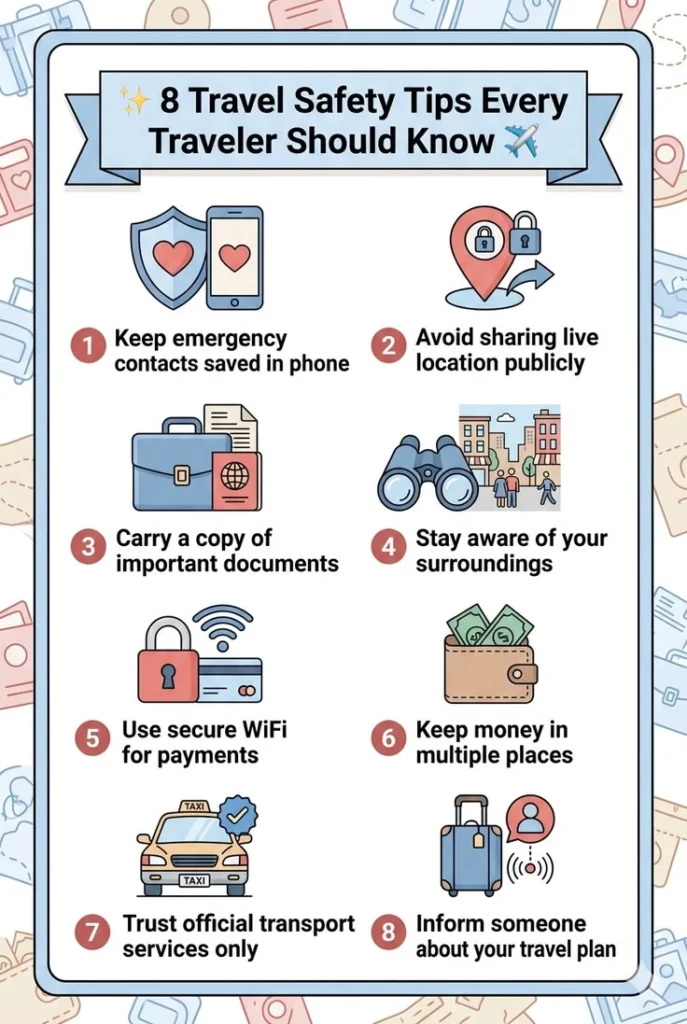
When you travel for the first time, many things feel new. You may be learning how airports work, how to use local transport, how to check into accommodation, how to manage money abroad, and how to move around safely in a city you do not know.
Good safety planning is not about fear. It is about awareness.
A safe traveler usually does three things well:
- Plans before the trip
- Pays attention during the trip
- Knows what to do if plans change
This is especially important for women travelers. Official travel guidance notes that women may face extra safety, health, cultural, or harassment-related risks in some destinations, so it is smart to research local customs, transport, accommodation, and emergency support before you go.
Read next: How to Plan Your First International Trip
Travel Safety Tips Before You Leave Home
The safest trips often start before you even pack your bag. A few simple steps at home can make your journey much easier if your phone dies, your card stops working, your luggage is delayed, or you need help quickly.
Research Your Destination Before Booking
Before you book a trip, research the destination carefully. Look beyond beautiful photos and ask practical questions:
- Is the area safe for first-time visitors?
- Are there neighborhoods tourists should avoid at night?
- What are the most common scams?
- Is public transport safe and easy to use?
- Are there local customs women should know about?
- What is the emergency number?
- Are there health risks, vaccines, or travel notices?
- Do you need travel insurance or special documents?
For trustworthy information, check official destination advice before you travel. The U.S. Department of State provides travel advisories and destination information, while the CDC Travelers’ Health website gives health guidance for international destinations.
Share Your Trip Details With Someone You Trust
Before leaving, send your travel details to a trusted friend or family member.
Share:
- Flight details
- Hotel or hostel address
- Travel dates
- Basic itinerary
- Emergency contacts
- Copy of your passport or ID
- Travel insurance details
- Your phone number or messaging app contact
You do not need to share every minute of your trip, but someone should know where you are staying and when you expect to arrive.
For solo travelers and women traveling alone, this simple habit can bring extra peace of mind.
Make Copies of Important Documents
Keep digital and physical copies of your important documents.
Useful copies include:
- Passport
- Visa
- Travel insurance
- Flight booking
- Hotel booking
- Emergency contacts
- Driver’s license
- Bank card emergency numbers
Save digital copies in secure cloud storage or email them to yourself. Keep one paper copy separate from your passport.
If your bag is lost or stolen, copies can make it easier to get help.
Buy Travel Insurance Before You Go
Travel insurance may not feel exciting, but it can be one of the most important parts of trip planning.
It can help with:
- Medical emergencies
- Lost luggage
- Cancellations
- Travel delays
- Theft
- Emergency assistance
Do not choose insurance only by price. Read what is included and excluded. If you plan adventure activities, road trips, hiking, diving, skiing, or long-term travel, check that your policy covers those activities.
Prepare Your Phone for Safety
Your phone is one of your most useful travel safety tools.
Before your trip:
- Download offline maps
- Save your hotel address
- Save emergency contacts
- Install a translation app
- Save transport apps
- Set up phone tracking
- Bring a power bank
- Turn on important security settings
- Know how to contact your bank from abroad
A phone with no battery can make small problems more stressful. Carrying a portable charger is especially helpful
during long sightseeing days or late arrivals.
Travel Safety Tips for Women and Solo Female Travelers
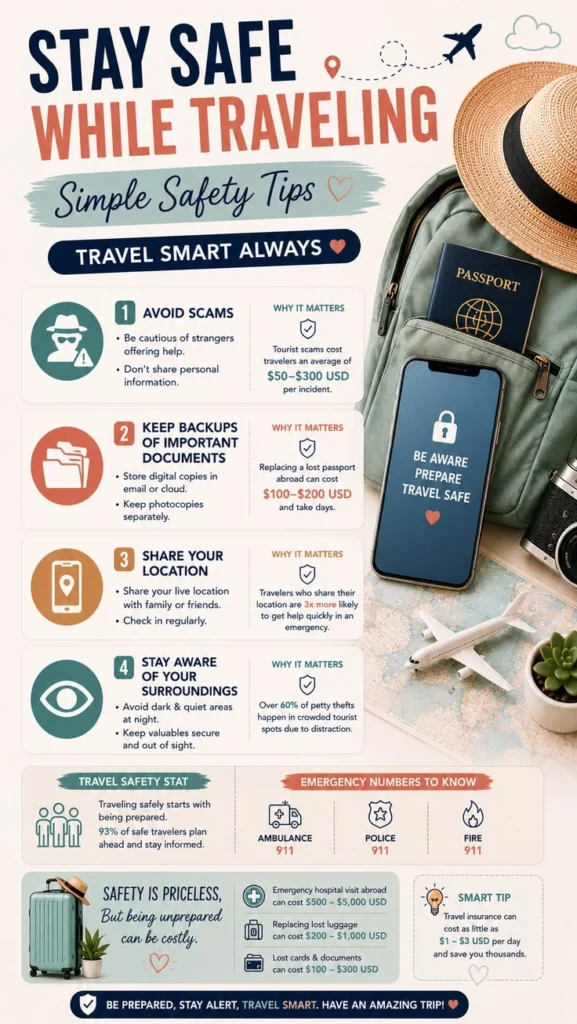
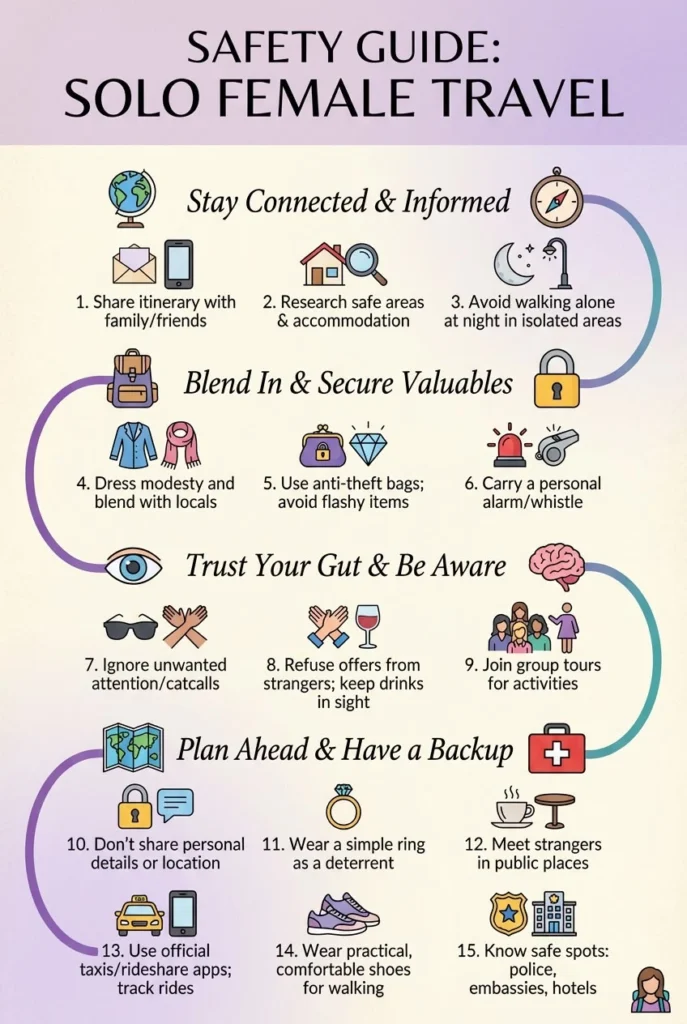
Women can absolutely travel safely and confidently, including solo. But it is also honest to say that women may need to think about certain situations differently, especially in unfamiliar places.
These travel safety tips for women are not about limiting your freedom. They are about helping you move through the world with more confidence.
Trust Your Instincts Without Apologizing
One of the most important safety habits for women travelers is simple: trust your instincts.
If a person, street, taxi, bar, hostel room, tour, or situation feels wrong, leave. You do not need to explain, be polite, or worry about hurting someone’s feelings.
Your comfort matters.
Examples:
- If a driver makes you uncomfortable, end the ride in a safe public place.
- If someone keeps asking personal questions, give vague answers.
- If a street feels too quiet, turn around.
- If a hostel room feels unsafe, ask to change rooms.
- If a date or new friend pushes boundaries, leave immediately.
Being polite is not more important than being safe.
Be Careful With Oversharing
Meeting people while traveling can be wonderful, but be thoughtful about what you share with strangers.
Avoid sharing:
- Your exact hotel name
- Your room number
- That you are traveling alone
- Your full itinerary
- Where you will be later that night
- Personal financial details
- Your live location publicly online
You can still be friendly without giving away private information.
Instead of saying, “I’m alone and staying at this hotel,” you can say, “I’m meeting friends later” or “I’m staying nearby.”
Choose Accommodation Carefully
For women and first-time travelers, accommodation can affect the whole trip.
Before booking, check:
- Recent reviews
- Safety comments from other women travelers
- Location at night
- Distance from public transport
- 24-hour reception
- Lockable doors
- Secure luggage storage
- Good lighting around the entrance
- Whether the area feels central and practical
A cheaper room far from everything may not be worth it if you feel unsafe coming back at night.
If possible, arrive during daylight on your first day. It is easier to find your accommodation, understand the area, and solve problems when it is still light.
Avoid Walking Alone Late at Night in Unfamiliar Areas
Walking is one of the best parts of travel, but late-night walking in a place you do not know can increase risk.
Safer options include:
- Taking official taxis or trusted ride apps
- Walking with a group
- Staying in well-lit busy streets
- Avoiding shortcuts through quiet areas
- Asking hotel staff about safe routes
- Planning your return before going out
If you go out at night, make sure your phone is charged and you know how you will get back.
Watch Your Drink and Personal Space
In bars, clubs, parties, and social hostel settings, stay aware of your drink and surroundings.
Practical habits:
- Do not leave your drink unattended
- Avoid accepting open drinks from strangers
- Know your alcohol limit
- Stay with people you trust
- Leave if someone becomes pushy
- Keep your phone and money secure
- Arrange your transport home before drinking
This advice is not about blaming travelers. It is about reducing risk in situations where judgment, crowds, and unfamiliar people mix together.
Read next: Solo Female Travel Tips for Beginners
Hotel Safety Tips for First-Time Travelers
Your accommodation should feel like a safe base. Whether you stay in a hotel, hostel, guesthouse, or apartment, a few small habits can help you feel more secure.
Check the Room Before Settling In
When you arrive, check:
- Door lock
- Window lock
- Balcony access
- Bathroom
- Connecting doors
- Emergency exits
- Safe or locker
If something feels wrong, ask reception for help or request another room.
Do Not Say Your Room Number Out Loud
If reception says your room number loudly and other people are nearby, you can quietly ask for a different room or simply be extra aware.
Also avoid telling strangers where you are staying. If someone asks, keep the answer general.
Use Extra Door Security
Many travelers, especially solo women, like to carry a small doorstop alarm or portable door lock. This can add peace of mind in hotels, hostels, and apartments.
You can also place your bag near the door or use the deadbolt when available.
Secure Your Valuables
Do not leave passports, cards, cash, cameras, or laptops lying around.
Use:
- Hotel safe
- Hostel locker
- Hidden pouch
- Locked luggage
- Anti-theft bag
- Separate storage for backup cards
Keep one bank card separate from your main wallet. If one bag is lost or stolen, you still have access to money.
Image 4 — Add in this section
File name: hotel-safety-tips-travelers.jpg
Alt text: Hotel door lock for travel safety tips for first-time travelers
Caption: Always check locks, windows, and emergency exits when you arrive.
Travel Safety Tips for Transport, Streets, Money, and Scams
Many travel problems happen during everyday moments: arriving at the airport, taking transport, using ATMs, walking through crowded areas, or speaking with strangers who approach tourists.
Use Official Transport
When arriving in a new place, especially at night, use trusted transport.
Good options include:
- Official airport taxi stands
- Pre-booked transfers
- Well-known ride apps
- Airport trains or buses
- Hotel-recommended transport
Avoid accepting rides from random drivers who approach you inside the airport or station.
Before getting into a car, check the license plate, driver name, route, and price if needed.
Keep Your Bag Secure in Crowded Places
Pickpocketing can happen in busy tourist areas, public transport, markets, stations, and festivals.
Useful habits:
- Keep your bag zipped
- Wear crossbody bags in front
- Avoid back pockets
- Keep your phone secure
- Do not hang bags on chair backs
- Be careful when someone distracts you
- Keep valuables close in crowds
If someone bumps into you, spills something, asks for help, or creates confusion, check your belongings.
Use ATMs Carefully
When using ATMs:
- Choose machines inside banks or busy safe areas
- Cover your PIN
- Avoid withdrawing large amounts at night
- Put money away before leaving the machine
- Watch for anyone standing too close
- Use cards with low foreign transaction fees if possible
Carry some cash, but do not keep all your money in one place.
Learn Common Travel Scams
Scams vary by destination, but common ones include:
- Fake taxis
- Overpriced tours
- “Free” bracelets or gifts
- Fake petitions
- Broken taxi meters
- Friendly strangers leading you to shops
- Distraction theft
- Fake police asking for documents or money
- Wrong change
- Rental damage scams
Research common scams before your trip. Knowing the pattern makes it easier to stay calm and say no.
Be Careful With Public Wi-Fi
Public Wi-Fi can be useful, but avoid accessing sensitive accounts on unsecured networks.
Be careful with:
- Online banking
- Passwords
- Passport information
- Work accounts
- Payment details
Use mobile data, an eSIM, or a trusted VPN if you need extra privacy.
Read next: Budget Travel Guide: How to Plan Affordable Trips Without Missing Out
Health and Emergency Travel Safety Tips
Safety is not only about theft or scams. Health preparation is also important, especially for international travel, long trips, tropical destinations, adventure travel, or places where medical care may be different from what you are used to.
Check Health Advice Before You Travel
Before an international trip, check destination-specific health information. The CDC Travelers’ Health website provides official travel health recommendations, including destination pages and vaccine guidance. From the EU/EEA/Switzerland: Bring your national European Health Insurance Card (EHIC) to access necessary public medical care at local co-payment rates. From outside the EU/EEA (e.g., if you need a Schengen visa): You must purchase a mandatory travel medical insurance covering a minimum of EUR 30,000, which includes emergency care and repatriation. Get global health insurance here Axaglobalhealthcare
You may need to consider:
- Routine vaccines
- Destination-specific vaccines
- Prescription medication
- Mosquito protection
- Food and water safety
- Travel insurance with medical coverage
- Local emergency numbers
- Nearby clinics or hospitals
Pack a Small Safety and Health Kit
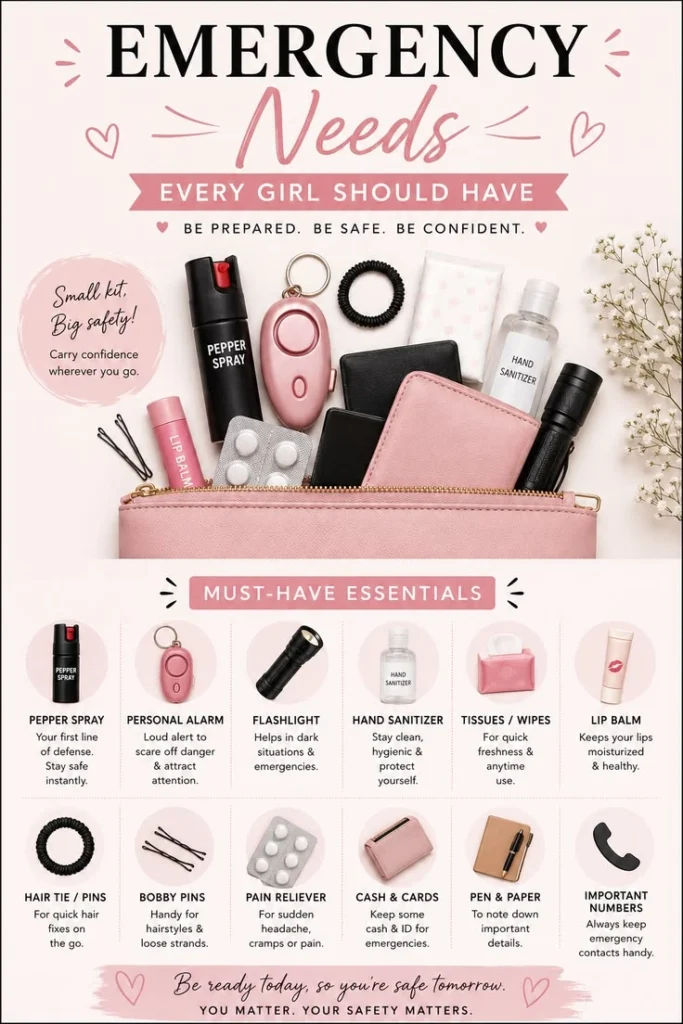
You do not need to pack a full pharmacy, but a small kit can help with common travel problems.
Useful items include:
- Personal medication
- Pain relief
- Plasters or bandages
- Hand sanitizer
- Electrolytes
- Motion sickness tablets
- Allergy medicine
- Rehydration salts
- Mosquito repellent
- Sunscreen
- Copies of prescriptions
For women travelers, also pack personal health items you may not easily find in every destination.
What to Do If Something Goes Wrong While Traveling
Even careful travelers can face problems. The most important thing is to stay calm and take one step at a time.
If You Feel Unsafe
Move to a public place such as:
- Hotel lobby
- Restaurant
- Shop
- Train station office
- Police station
- Museum or attraction entrance
- Busy café
Call someone you trust or ask staff for help. You do not need to solve everything alone.
If Your Passport Is Lost or Stolen
Take these steps:
- Check your bags carefully.
- Report the loss to local police if needed.
- Contact your embassy or consulate.
- Use your digital and paper passport copies.
- Contact your airline if travel plans are affected.
This is why document copies are so helpful.
If Your Card Is Lost or Stolen
Act quickly:
- Freeze the card in your banking app.
- Contact your bank.
- Use your backup card or emergency cash.
- Check recent transactions.
- Report fraud if needed.
Keep at least one backup payment method separate from your main wallet.
If You Get Sick
If you feel unwell:
- Rest early
- Drink safe water
- Contact your insurance provider
- Ask accommodation staff for a recommended clinic
- Keep receipts for medical claims
- Seek urgent help if symptoms are serious
Before traveling internationally, check health guidance for your destination and prepare any needed medication, vaccines, or documents.
Related Articles
Planning a safer and smarter trip? You may also enjoy:
- How to Plan Your First International Trip
- Budget Travel Guide: How to Plan Affordable Trips Without Missing Out
- How to Pack Light for Any Trip
- Best Travel Apps for Easy Trip Planning
- Solo Female Travel Tips for Beginners
Final Thoughts on Travel Safety Tips
Travel safety tips are not meant to make you nervous. They are meant to help you feel prepared and confident.
The more prepared you are, the more freedom you have to enjoy the trip.
Research your destination, choose accommodation carefully, protect your documents, trust your instincts, stay aware in public places, and make safety decisions that match your comfort level. This is especially important for women travelers, but these habits help everyone.
A safe trip is not a perfect trip where nothing unexpected happens. A safe trip is one where you know how to respond, protect yourself, and keep moving forward with confidence.
FAQ About Travel Safety Tips
What are the most important travel safety tips for first-time travelers?
The most important travel safety tips are to research your destination, share your itinerary, keep emergency money separate, use official transport, protect your documents, buy travel insurance, and trust your instincts.
Is it safe to travel for the first time?
Yes, many first-time travelers have safe and positive trips. The key is preparation. Research your destination, book safe accommodation, keep copies of documents, protect your money, and stay aware of your surroundings.
Is solo travel safe for women?
Solo travel can be safe for women with good planning and awareness. Choose accommodation carefully, avoid sharing too much personal information, plan transport at night, stay aware in social situations, and trust your instincts if something feels wrong.
How can I avoid scams while traveling?
Research common scams before you go, use official transport, avoid deals that seem too good to be true, keep your belongings close, and be cautious when strangers approach you with urgent or emotional stories.
What should I do if I feel unsafe while traveling?
Move to a public place, contact someone you trust, ask staff or local authorities for help, and leave the situation as soon as possible. You do not need to be polite if your safety feels at risk.
Should I carry cash or card while traveling?
Carry both, but do not keep everything in one place. Use a main card, a backup card, and a small amount of emergency cash stored separately.
How do I choose a safe hotel or hostel?
Read recent reviews, check the location, look for comments from solo travelers or women travelers, choose places near transport, and check for secure locks, lockers, reception, and good lighting.
What should women pack for safer travel?
Useful items include a portable charger, crossbody bag, doorstop alarm or portable lock, copies of documents, emergency cash, comfortable shoes, travel insurance details, and any personal health items needed for the destination.
No responses yet